
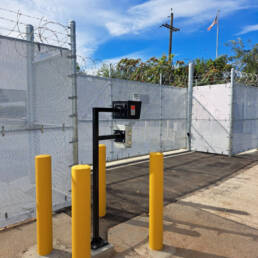
Commercial Gate Operators and Access Control Built for High-Traffic Sites
An automated gate is only as good as the operator moving it and the system deciding who gets through. On a busy commercial site, the gate may cycle hundreds of times a day. An undersized operator burns out, a poorly placed sensor creates a safety risk, and an access system nobody can manage turns into a gate left standing open.
KA Commercial Fence installs commercial gate operators and access control systems across California. We size operators to the gate, install the safety devices required by UL 325 and ASTM F2200, and integrate keypads, card readers, remotes, and vehicle detection so the gate works the way your site operates. Every install is completed by our own W-2 crews.
What a Commercial Gate Operator Does
A commercial gate operator is the motorized unit that opens and closes a vehicle or pedestrian gate on command. It connects to controls that tell it when to open, safety devices that tell it when to stop or reverse, and a power source, often with battery backup.
Commercial operators differ from residential openers in three ways: they’re rated for much higher duty cycles, they’re built to move heavier and longer gates, and they’re classified for commercial use under UL 325, the safety standard for gate operators.
Sizing a Commercial Gate Operator
Choosing the operator starts with the gate, not the catalog. We size every operator to these factors:
- Gate weight. Heavy steel and cantilever gates need operators rated well above the gate’s actual weight.
- Gate length. Longer gates take more force to start and stop, especially in wind.
- Duty cycle. A gate opening a few times a day can use an intermittent-duty operator. A distribution yard with constant truck traffic needs a continuous-duty, high traffic commercial slide gate operator.
- Speed. Busy sites often need faster open times to avoid vehicles stacking up at the entry.
- Power and backup. Available voltage, solar options for remote sites, and battery backup so the gate can still open during an outage.
An operator that’s too small for the gate is the most common reason automated gates fail early. We’d rather spec the right unit at bid time than replace a burned-out motor a year later.

Operator Types We Install
Slide Gate Operators
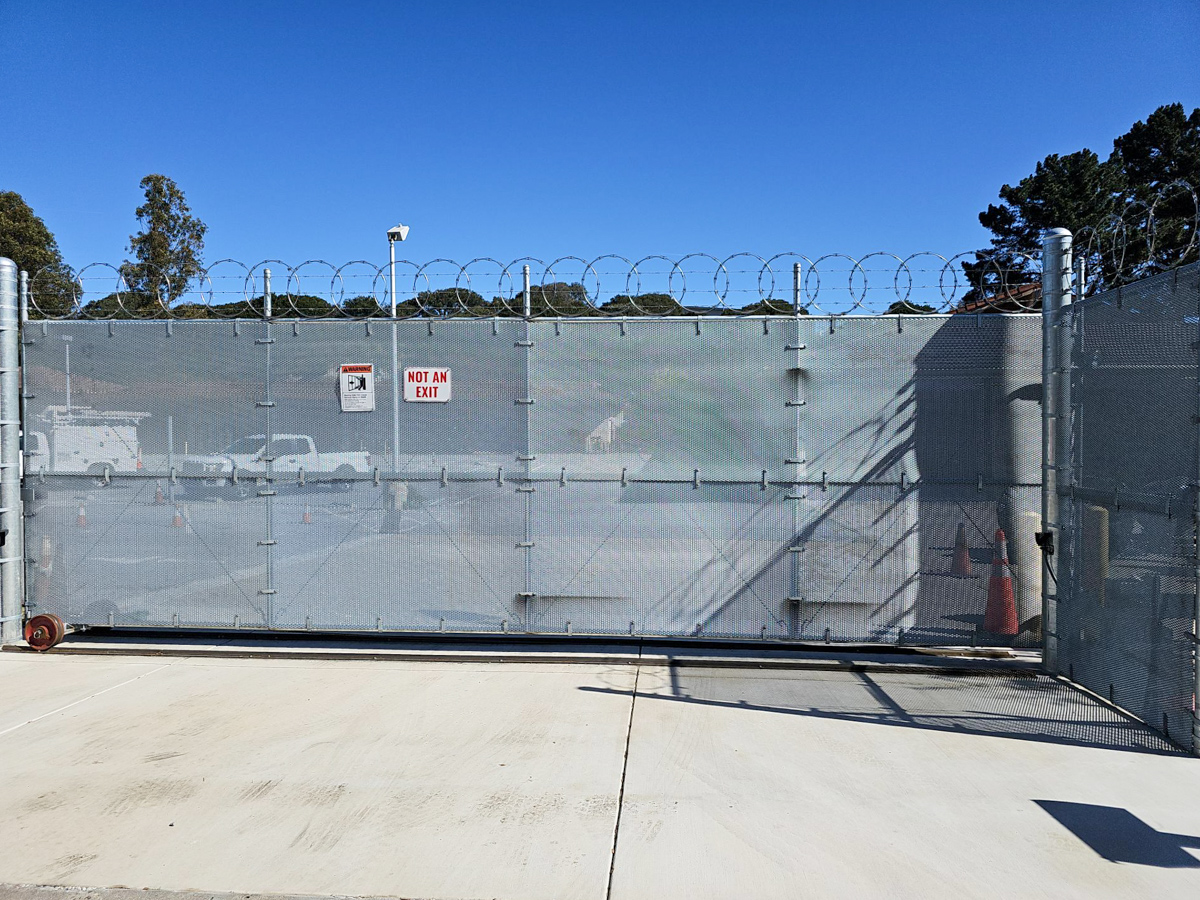
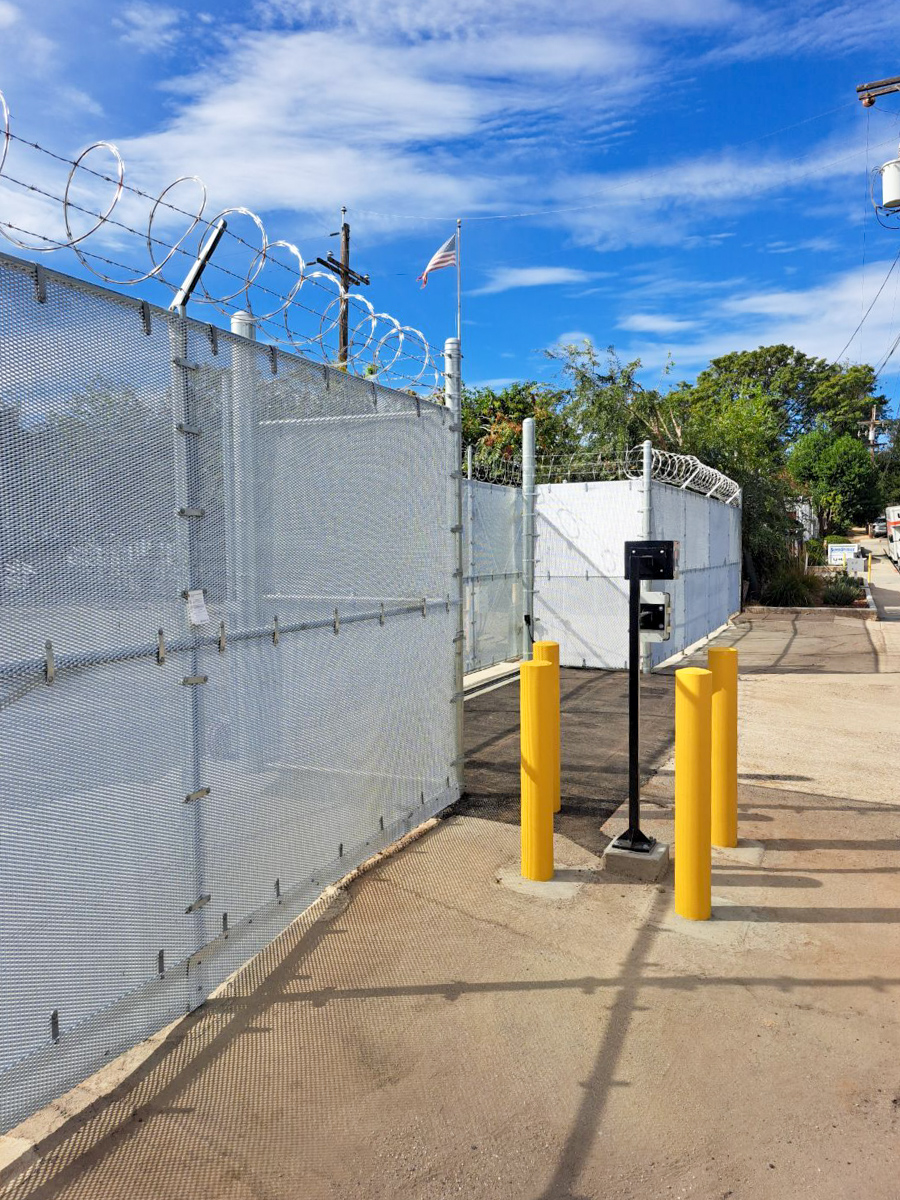
Slide operators drive the gate with a chain or rack-and-pinion system mounted beside the opening. They’re the standard choice for wide vehicle entries, truck yards, and cantilever gates.
Swing Gate Operators
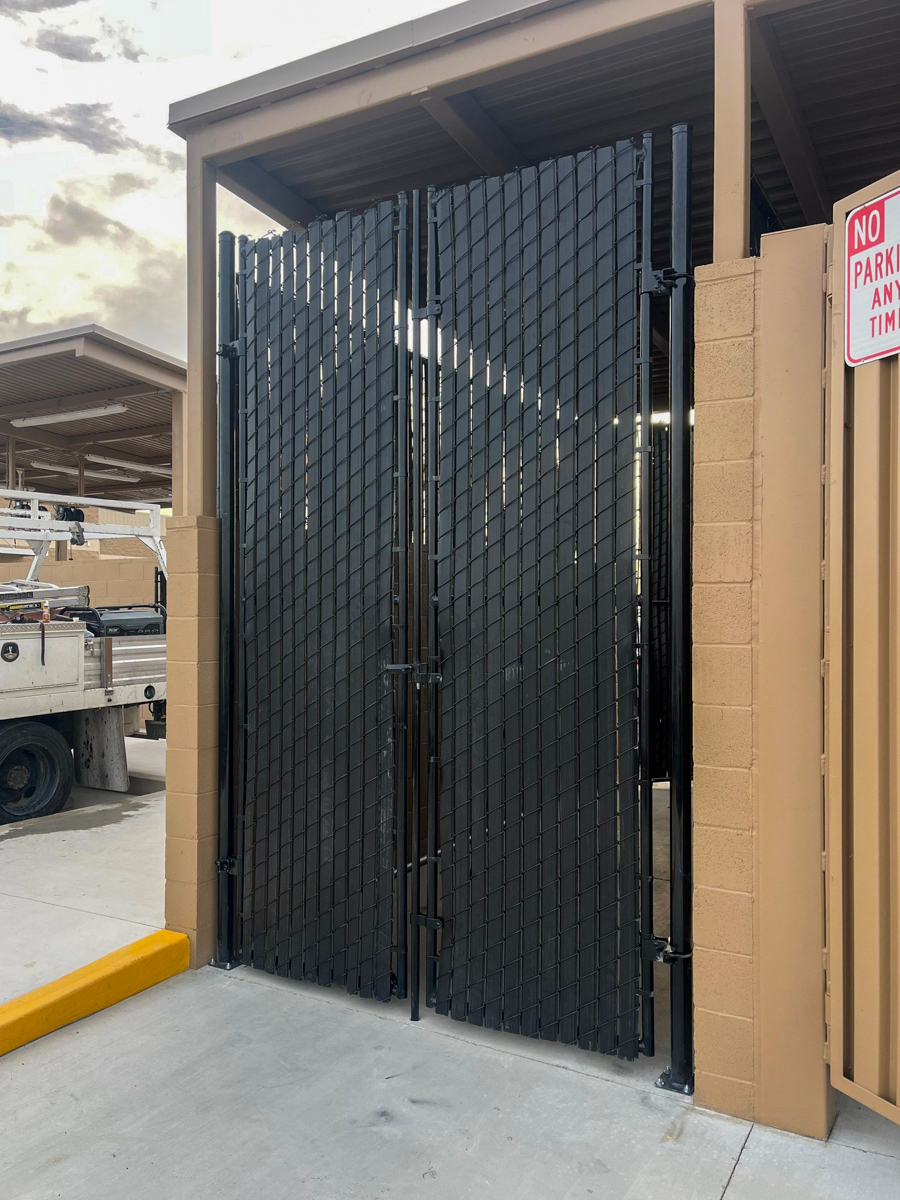
Swing operators use articulated arms, linear actuators, or below-ground units to open single or double swing gates. They suit entries where the gate swings into clear, level space.
Choosing Between Slide and Swing Automation
When an opening could take either type, a few site conditions usually decide it. Slide operators handle wide openings, heavy gates, and wind better, and they keep the gate out of the drive path while it moves. Swing operators are often more economical on narrower openings and need less straight space along the fence line, but they need clear, level ground through the full swing arc and can struggle in high wind. On sloped drives, a slide or cantilever design is usually the safer choice. We review these conditions during plan review and recommend the operator type that fits each opening.
Commercial Gate Access Control Options
Access control decides who gets in, when, and how. Most commercial sites combine two or more of these:
- Keypads with individual codes for employees, vendors, and tenants.
- Card and fob readers that log entries and let you turn off a lost credential instantly.
- Remote transmitters for fleet vehicles and managers.
- Telephone entry and intercoms so visitors can call for access.
- Vehicle detection loops for free exit, so vehicles leaving the site open the gate automatically.
- Emergency access such as key switches and other fire department access devices required by local fire authorities.
- Time schedules that keep a gate open during business hours and secure after.
We handle commercial gate access control system installation as part of the gate scope, so the operator, readers, loops, and safety devices are planned together instead of pieced together later.
Planning an automated entry? Send your gate schedule or site plan, and we’ll size the operator and access controls and return a detailed quote. Request a bid.
Safety Standards and Entrapment Protection
Automated gates are heavy, powerful machines, and safety is not optional. Commercial operators must meet UL 325, which classifies gate operators by use and requires entrapment protection. Gate construction must meet ASTM F2200, which covers how automated vehicular gates are built, including guarding of rollers and openings that could trap hands or feet.
In practice, that means every automated gate we install includes the required monitored safety devices for its type, such as photo eyes that detect a vehicle or person in the gate’s path and contact edges that stop and reverse the gate on contact. We also mount controls where users can see the gate when they operate it, and we keep pedestrians separated from vehicle gates with a dedicated walk gate where needed.
Older automated gates installed before current standards often lack these protections. If your site has an existing operator, we can evaluate it as part of a new project.
Where We Automate Gates
Distribution and Logistics Yards
High-volume truck entries need fast, continuous-duty operators, vehicle detection, and reliable access credentials for drivers and fleet vehicles.
Dealerships and Retail Lots
Vehicle inventory lots use automated gates with scheduled open and close times and secure after-hours access for managers and carriers.
Apartment Communities and HOAs
Residential communities use telephone entry, resident codes, and visitor management at main entries, with separate pedestrian gates.
Secure and Remote Facilities
Utility, solar, and industrial sites often combine automated gates with a full perimeter. See our page on security fence installation for the fence side of those projects.
How Operators Fit With the Gate
An operator can’t fix a gate that wasn’t built to move. Gates need balanced travel, smooth rollers or hinges, and frames strong enough for automated use. When we build the gate and the automation together, every part is designed to work with the others. Learn more about the gates themselves on our commercial gate installation page.
If your site has several automated entries, we can tie them into one access system, so the same credentials work at every gate and a lost card or old code is shut off everywhere at once.
Keeping an Automated Gate Running
Commercial gate controls and operators work hard, and a little routine care prevents most failures. We recommend a few habits for every automated entry:
- Test safety devices monthly. Photo eyes and contact edges should stop or reverse the gate every time. A device that’s been bumped out of alignment can leave the gate unprotected.
- Keep the gate path clear. Gravel, debris, and landscaping in a track or swing path force the operator to work harder and wear out sooner.
- Check the gate itself. Rollers, hinges, and tracks should move freely. A gate that drags will strain even a well-sized operator.
- Replace backup batteries on schedule. Batteries lose capacity over time, and you’ll only find out during an outage.
What We Need to Bid Your Automation Scope
- Gate schedule or the size, type, and material of each gate to be automated
- Expected daily traffic and hours of operation
- Access methods you want, such as codes, cards, remotes, or telephone entry
- Available power at each gate, or whether solar is needed
- Fire department access requirements for the site, if known
- Prevailing wage status and bid due date
Working With KA Commercial Fence
Automation projects usually land at the end of a build, when the schedule is tightest. When we give you a date, we keep it. Every technician and installer on your site is our W-2 employee, not a subcontracted crew, and we handle the full scope from operator sizing to final cycle testing. KA Commercial Fence is a brand of Kerb Appeal Fenceworks, a CSLB-licensed California contractor with $5 million in liability coverage.
Gate Operator and Access Control FAQ
Operator size depends on the gate’s weight, length, type, and how many times it opens each day. We calculate those factors and specify an operator rated above the gate’s actual load.
UL 325 is the safety standard for gate operators. It classifies operators by use and requires entrapment protection devices, such as photo eyes and contact edges, that stop or reverse the gate when something is in its path.
With battery backup, most operators can continue opening and closing for a number of cycles during an outage. Many can also be released for manual operation.
Yes. Card, fob, and many keypad systems log each entry, and credentials can be added or removed without changing every user’s code.
Often, yes, if the gate is in good condition and moves freely. Some older gates need repairs or upgrades before an operator can be safely added.
Many California fire authorities require emergency access for automated gates, such as a key switch. Requirements vary by jurisdiction, so we confirm them during plan review.
Request a Bid on Gate Automation
From a single slide operator to a full access system across multiple entries, we’ll size it correctly and install it safely.